
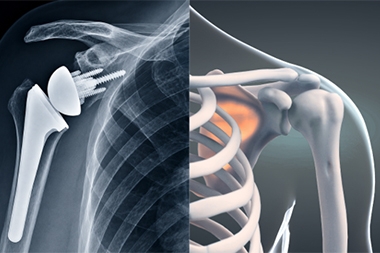
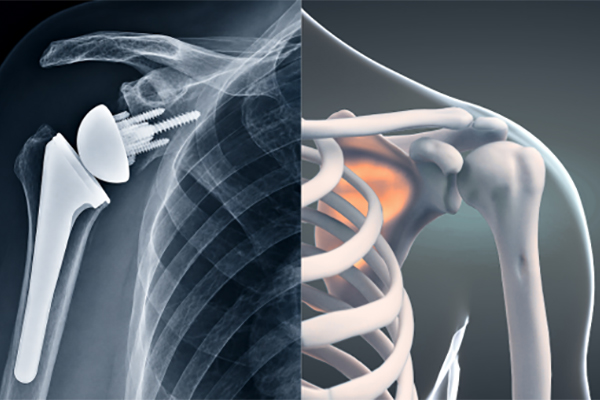
For decades, shoulder replacement relied entirely on a surgeon's hands, eyes, and experience to position the implant correctly inside one of the body's most complex joints. That is changing. Robotic-arm-assisted technology, long established in hip and knee replacement, has now extended into shoulder surgery, and patients researching their options are starting to ask what that actually means for them. Understanding the real difference between Mako robotic and traditional shoulder replacement starts with what changes inside the operating room.
What Makes Shoulder Replacement Such a Precision Challenge
The shoulder is mechanically unlike the hip or knee. Successful shoulder replacement depends on precisely positioning the glenoid component, the socket portion of the joint, into a small, often irregularly shaped piece of bone with limited margin for error. Even small deviations in positioning can affect implant stability, range of motion, and how long the replacement lasts before wear becomes a problem. This precision challenge is exactly why shoulder replacement was one of the last major joint procedures to receive robotic assistance, well after hip and knee applications were already established.
How Traditional Shoulder Replacement Has Always Worked
In conventional shoulder replacement, the surgeon relies on preoperative imaging, direct visualization during surgery, and manual instrumentation to prepare the bone and position the implant. This approach has a long, well-established track record and remains entirely appropriate for many patients. Its limitation is variability. Even highly experienced surgeons face natural differences in positioning from one case to the next, since the technique depends on hand-eye coordination and judgment in real time without a digital model guiding every step.
What Robotic Guidance Actually Adds
Mako's shoulder application uses a preoperative CT scan to build a personalized 3D model of the patient's specific shoulder anatomy, allowing the surgical plan, including glenoid component position and angle, to be mapped out before the first incision. During surgery, the robotic arm provides real-time guidance and feedback as the surgeon prepares the bone, helping translate that digital plan into the operating room with a level of consistency that is difficult to achieve through manual technique alone. This mirrors the approach already used in robotic-assisted hip and knee replacement, where preoperative planning and intraoperative guidance have become standard tools for improving implant positioning accuracy.
Why the Shoulder Application Is Still Considered New Technology
It is worth being direct about where this technology currently stands. Mako's shoulder application received FDA clearance in late 2024, initially for reverse shoulder replacement, and remains in a limited rollout as surgeons complete specialized training on the system. Because of how recently it launched, large published outcome studies specific to robotic shoulder replacement do not yet exist the way they do for robotic hip and knee surgery, which has years of comparative data behind it. What the broader evidence from hip and knee applications consistently shows is that robotic guidance improves the accuracy of implant positioning compared to manual technique, and that improved positioning accuracy is a reasonable, biologically sound basis for extending the same approach to the shoulder. Patients considering this option should understand it as a promising extension of a proven concept.
Choosing Between the Two Approaches
Neither approach guarantees a perfect outcome, and a skilled surgeon experienced in manual technique can achieve excellent results without robotic assistance. The decision between robotic and traditional shoulder replacement often comes down to the complexity of an individual patient's anatomy, the type of shoulder replacement being performed, and a surgeon's specific experience and comfort with each approach. This is a conversation that benefits from a detailed discussion of your particular case rather than a one-size-fits-all answer.
Making an Informed Decision About Your Shoulder Surgery
Robotic technology represents a genuine evolution in how shoulder replacement can be planned and executed, but it is one tool among several factors that determine a successful outcome. The surgeon's experience, an accurate diagnosis, and a tailored surgical plan remain just as important as which instrumentation is used in the operating room.
If you are exploring shoulder replacement and want to understand whether a robotic or traditional approach makes the most sense for your specific shoulder, that is a conversation worth having directly with your surgeon.
Frequently Asked Questions
1. What is the difference between Mako robotic shoulder replacement and traditional shoulder replacement?
Mako robotic shoulder replacement uses a preoperative CT scan to build a personalized 3D surgical plan and provides real-time guidance during surgery, while traditional shoulder replacement relies on manual instrumentation and the surgeon's direct visualization and judgment.
2. Is Mako robotic shoulder replacement better than traditional shoulder replacement?
Robotic guidance has been shown to improve implant positioning accuracy in hip and knee replacement, and the shoulder application is built on that same approach, though large shoulder-specific outcome studies are still emerging since the technology is newer.
3. Is Mako shoulder replacement available for all shoulder replacement types?
Mako's shoulder application initially received clearance for reverse shoulder replacement, and availability may vary by surgeon and location as the technology continues to roll out.
4. How does robotic guidance improve shoulder replacement surgery?
Robotic guidance helps translate a personalized preoperative surgical plan into the operating room with greater consistency, reducing some of the natural variability that can occur with manual implant positioning.
5. Who is a good candidate for robotic shoulder replacement?
Candidacy depends on the type of shoulder condition, the complexity of the patient's anatomy, and surgeon availability and experience with the robotic system, which is why an individual evaluation is the best way to determine the right approach.
Reference Links:
- Robot-assisted shoulder arthroplasty - ScienceDirect
- Mako surgical robot could improve the traditional surgical techniques of joint surgery fellows - PubMed Central
AUTHOR: Brian W. Hill, M.D., FAAOS – Orthopaedic Shoulder & Elbow Surgeon
Brian W. Hill, M.D., FAAOS is a board-certified orthopaedic surgeon specializing in shoulder and elbow care at Palm Beach Orthopaedic Institute. He provides comprehensive treatment for a wide range of shoulder and elbow conditions, utilizing both advanced arthroscopic and open surgical techniques, including Mako robotic-assisted shoulder replacement — a cutting-edge technology offered by only a select few surgeons nationwide. Dr. Hill is known for combining evidence-based medicine with clear communication and compassionate, patient-centered care to help individuals make confident, informed treatment decisions.
Credentials & Training
Dr. Hill completed his orthopaedic surgery residency at St. Louis University and his shoulder and elbow fellowship at the prestigious Rothman Orthopaedic Institute at Thomas Jefferson University Hospitals. He has authored numerous peer-reviewed articles and book chapters on shoulder and elbow conditions, presenting his research at national and international orthopaedic conferences. View his full publication history on Doximity, ResearchGate, US News Doctors, and PubMed.
Dr. Hill has been recognized as a Top Doctor by Castle Connolly and Palm Beach Illustrated, two of the most respected physician recognition programs in the country.
Clinical Expertise
As a shoulder and elbow specialist, Dr. Hill treats arthritis, sports injuries, instability, fractures, massive rotator cuff tears, complex deformities, and failed previous shoulder surgeries. He has a particular interest in managing challenging shoulder conditions that require advanced reconstructive strategies.
With a passion for baseball, Dr. Hill serves as an assistant team physician for the Washington Nationals in West Palm Beach, providing specialized care to high-level athletes.
Dr. Hill emphasizes a collaborative approach to care, ensuring patients fully understand their diagnosis and treatment options. His goal is to restore function, reduce pain, and help patients safely return to the activities they value most.
Medical Disclaimer: This information is for educational purposes only and does not constitute medical advice. For diagnosis and treatment recommendations, please consult with Dr. Hill or another qualified orthopaedic specialist.
Content authored by Dr. Brian W. Hill and verified against official sources.


