
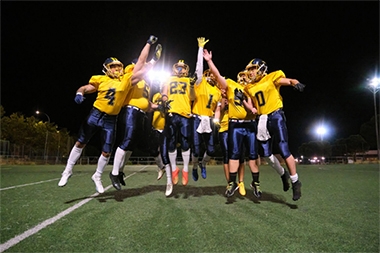
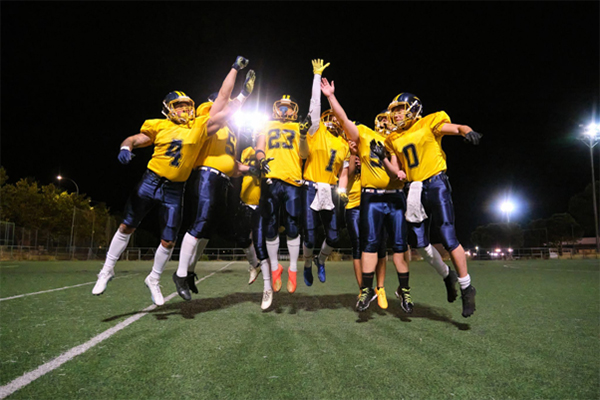
Friday night under the lights or Saturday in front of a packed stadium is supposed to be the highlight of the week, not the start of a season-threatening injury. But that open-field tackle, diving catch, or hard landing on an outstretched arm just left your shoulder (or your son's shoulder) feeling wrong in a way that the athletic trainer's ice and a few days off have not fixed. If this sounds familiar, you are far from alone, and knowing when a football injury needs more than a short rest can make all the difference in a young athlete's recovery and future in the sport.
Why Student Athletes Are Especially Vulnerable
High school and college football players face a particular kind of risk. They practice and play at high intensity several days a week, often with year-round training, and camps in the offseason. That means a high volume of collisions, and the shoulder takes a large share of them. In high school players especially, bones, muscles, and stabilizing structures are still developing, and strength gains in the weight room do not always keep pace with the speed and force of the game.
This combination of repeated contact, growing bodies, and pressure to stay on the field is exactly why so many football shoulder injuries happen not during highlight-reel plays, but during ordinary moments: a routine tackle with the arm extended, a block with the arm out of position, or simply bracing for impact on a fall to the turf.
The Most Common Shoulder Injuries on the Field
Several injury patterns show up repeatedly among high school and college football players. Shoulder dislocation is one of the most dramatic and immediately recognizable, typically occurring when the arm is forced up and back during an arm tackle or fall, pushing the ball of the joint out of its socket. While a dislocation can sometimes be reduced on the sideline, the damage it leaves behind to the labrum and surrounding soft tissue often requires further evaluation.
Shoulder labral tears are another frequent injury, particularly among linemen who absorb repeated blocking forces and quarterbacks who place heavy demands on the shoulder with every throw. A tear can happen suddenly during a specific play, or it can develop gradually from repetitive stress over a season, showing up as pain, clicking, or a loss of throwing velocity.
Less dramatic but equally disruptive, AC joint sprains and separations occur when a player lands directly on the top of the shoulder, common during pile-ups and tackles into the ground, producing a visible bump and persistent pain at the top of the joint that many players initially dismiss as a bruise. Football players can also experience stingers or burners, a nerve injury in the neck and shoulder region that causes burning pain or temporary arm weakness and should always be checked before a player returns to the field.
Why "Playing Through It" Isn't Always the Answer
There is a strong culture in football of playing through pain, and student athletes often feel pressure from teammates, coaches, recruiting timelines, or themselves to get back on the field as quickly as possible. The trouble is that easing pain and actual healing are not always the same thing. A torn labrum or a shoulder with lingering instability from a dislocation can feel noticeably better within days while the underlying structural damage remains, only to resurface with the next tackle or hit.
This pattern is particularly common with shoulder instability. Once the shoulder has dislocated or subluxed once, the risk of it happening again is highest in young athletes involved in contact sports, and each additional episode can cause further damage to the labrum, cartilage, and bone of the shoulder socket.
When It's Time to See a Shoulder Specialist
Certain signs point clearly toward the need for a specialist evaluation rather than continued management on the sideline or at home. Persistent pain that has not meaningfully improved after a week or two, a visible deformity or asymmetry compared to the other shoulder, weakness that makes it difficult to lift the arm overhead or make a tackle, a sensation of instability or the shoulder feeling like it might "pop out," numbness or tingling down the arm, and any injury involving an audible pop at the time of impact are all reasons to seek evaluation.
Coordination between the athletic trainer, team physician, parents, and specialist is also important, especially when decisions involve the timing of treatment around the season, playoff runs, or college recruiting. A second opinion for shoulder surgery is worth considering for players and families who were told after an initial evaluation that surgery is their only option, since treatment approaches and surgical techniques can vary considerably between providers.
How Diagnosis and Treatment Actually Work
An accurate diagnosis typically starts with a physical exam assessing range of motion, strength, and joint stability, followed by imaging such as X-rays or an MRI when a more significant injury is suspected. Many football shoulder injuries respond well to a structured, non-surgical approach, including a period of rest from contact, targeted physical therapy, and a gradual, supervised return to play once strength and stability have been restored.
For injuries that do not respond to conservative treatment, or for more significant structural damage such as a large labral tear or recurrent dislocation, shoulder arthroscopy offers a minimally invasive surgical option to repair damaged tissue through small incisions. For athletes with bone loss from repeated dislocations, more advanced stabilization procedures may become part of the conversation. The goal in every case is not just to get the player back for this season, but to protect the shoulder for the rest of their athletic career and beyond.
Frequently Asked Questions
How do I know if a shoulder injury from football needs treatment?
Persistent pain beyond a week or two, visible deformity, weakness lifting the arm, a feeling of instability, numbness or tingling, or an audible pop at the time of injury are all signs that a shoulder specialist evaluation is warranted rather than continued rest and taping.
Can a shoulder dislocation heal without surgery in a young football player?
Some first-time shoulder dislocations can be managed without surgery through physical therapy and a brace, particularly when an athlete is trying to finish a season. However, young contact athletes have a high risk of the shoulder dislocating again, so surgical stabilization is often discussed, and the right choice depends on the athlete's age, position, timing in the season, and long-term goals.
How long does it take a student athlete to return to football after a shoulder injury?
Return-to-play timelines vary widely depending on the injury. A mild AC joint sprain may only keep a player out for a few weeks, while recovery after shoulder stabilization surgery commonly takes five to six months of structured rehabilitation before full contact is allowed.
Why do young athletes get shoulder injuries if they are in great shape?
Conditioning helps, but football places repeated, high-force demands on the shoulder that even well-trained athletes cannot fully protect against. In high school players, bodies are still growing and developing, and year-round training without enough rest can add to the risk.
Is it normal for shoulder pain to come and go during the season?
Fluctuating pain does not necessarily mean an injury has healed. Structural damage such as a labral tear or lingering instability can feel better between games before symptoms return, which is why persistent or recurring pain deserves a proper evaluation.
A football shoulder injury does not have to end a season or a career, but playing through persistent shoulder pain rarely leads anywhere good. If your shoulder, or your athlete's shoulder, has not felt right since the last game, a conversation with a shoulder and elbow specialist can provide an accurate diagnosis and a clear, safe path back to the field.
AUTHOR: Brian W. Hill, M.D., FAAOS – Orthopaedic Shoulder & Elbow Surgeon
Brian W. Hill, M.D., FAAOS is a board-certified orthopaedic surgeon specializing in shoulder and elbow care at Palm Beach Orthopaedic Institute. He provides comprehensive treatment for a wide range of shoulder and elbow conditions, utilizing both advanced arthroscopic and open surgical techniques, including Mako robotic-assisted shoulder replacement — a cutting-edge technology offered by only a select few surgeons nationwide. Dr. Hill is known for combining evidence-based medicine with clear communication and compassionate, patient-centered care to help individuals make confident, informed treatment decisions.
Credentials & Training
Dr. Hill completed his orthopaedic surgery residency at St. Louis University and his shoulder and elbow fellowship at the prestigious Rothman Orthopaedic Institute at Thomas Jefferson University Hospitals. He has authored numerous peer-reviewed articles and book chapters on shoulder and elbow conditions, presenting his research at national and international orthopaedic conferences. View his full publication history on Doximity,ResearchGate,US News Doctors, and PubMed.
Dr. Hill has been recognized as a Top Doctor by Castle Connolly and Palm Beach Illustrated, two of the most respected physician recognition programs in the country.
Clinical Expertise
As a shoulder and elbow specialist, Dr. Hill treats arthritis, sports injuries, instability, fractures, massive rotator cuff tears, complex deformities, and failed previous shoulder surgeries. He has a particular interest in managing challenging shoulder conditions that require advanced reconstructive strategies.
With a passion for baseball, Dr. Hill serves as an assistant team physician for the Washington Nationals in West Palm Beach, providing specialized care to high-level athletes.
Dr. Hill emphasizes a collaborative approach to care, ensuring patients fully understand their diagnosis and treatment options. His goal is to restore function, reduce pain, and help patients safely return to the activities they value most.
Medical Disclaimer: This information is for educational purposes only and does not constitute medical advice. For diagnosis and treatment recommendations, please consult with Dr. Hill or another qualified orthopaedic specialist.
Content authored by Dr. Brian W. Hill and verified against official sources.


