
Racquet sports have grown quickly across Palm Beach County, and so have shoulder injuries that don’t go away after the match. One common cause is a labrum tear, which players often write off as ordinary soreness. Typical signs include a catch or click during overhead movements like serving, pain deep in the shoulder, and weakness with everyday tasks such as lifting a cup. Here’s what a labrum tear is and when it’s worth getting checked.
What Is a Shoulder Labrum Tear?
The shoulder is a ball-and-socket joint, but the socket is shallow, a bit like a golf ball resting on a tee. The labrum is a ring of tough cartilage that deepens the socket and gives the joint stability. It also anchors the biceps tendon at the top of the shoulder. When the labrum frays or tears, the joint can feel painful, loose, or catchy. Hip joints have a labrum too, but this article focuses on the shoulder, where racquet sports do most of their damage.
Why Tennis and Pickleball Put the Labrum at Risk
Serves, overheads, and smashes load the shoulder with repeated, forceful overhead motion. Over time, that stress can wear at the labrum, especially where the biceps tendon attaches. This pattern is often called a SLAP tear.
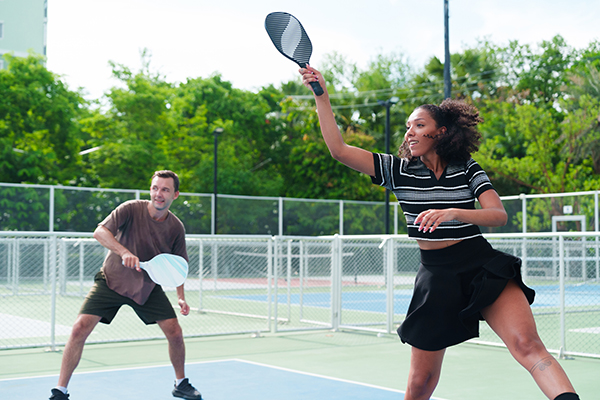
Pickleball adds its own twist. Many players are newer to the sport, may have stiff or deconditioned shoulders, and play several days a week. Quick reaches for a dink or a lob, often without a proper warm-up, can strain a joint that is already worn. Age-related changes in the shoulder can make a tear more likely, so weekend warriors are not immune.
Signs Your Shoulder Pain Might Be a Labrum Tear
Shoulder pain can come from several sources, including the rotator cuff, so symptoms alone cannot confirm a diagnosis. Common clues include:
- A deep ache inside the shoulder, often worse with overhead movement
- Catching, clicking, popping, or grinding
- A sense that the shoulder feels loose or unstable
- Weakness or reduced throwing and serving power
- Night pain that interrupts sleep
If these last more than a couple of weeks, or if the pain began with a sudden injury, an evaluation with a shoulder and elbow specialist is worthwhile.
How a Labrum Tear Is Diagnosed
Diagnosis begins with a conversation about your sport, your symptoms, and how the pain started. A physical exam tests strength, motion, and stability using specific maneuvers. On-site digital X-rays can rule out bone problems, and an MRI shows the labrum in more detail. Imaging is read alongside your exam, because some tears seen on MRI never cause symptoms.
Treatment Often Starts Without Surgery
Not every labrum tear needs an operation. Many players improve with rest from aggravating activity, anti-inflammatory strategies, and targeted physical therapy that strengthens the rotator cuff and the muscles around the shoulder blade. Therapists also correct motion patterns, such as a serve that overloads the joint.
For persistent pain, ultrasound-guided injections can calm inflammation so rehabilitation works better. Pain that does not respond to these steps may call for input from a pain management team. A sports medicine evaluation can also help you decide how to stay active while the shoulder heals.
When Surgery Becomes the Better Option
Surgery is typically considered when a tear causes ongoing pain, instability, or weakness despite a good trial of conservative care. Most labrum repairs are done with shoulder arthroscopy, using small incisions, a tiny camera, and fine instruments. Depending on the tear, the surgeon may repair the labrum, reattach it, or address the biceps tendon.
Age and activity level influence the plan. Younger, highly active players with unstable shoulders often do well with repair. In older players, labral damage frequently comes with arthritis or rotator cuff wear, and treatment may focus on those conditions instead. In advanced cases of arthritis, options such as outpatient shoulder replacement may be discussed, though that is far from the first step.
Recovery and Returning to the Court
Recovery after a labrum repair is gradual. A sling is common at first, followed by progressive therapy to restore motion and then strength. Returning to serving, overheads, and competitive play usually takes several months, and your surgeon sets the timeline based on the type of repair and how your shoulder responds. Rushing back is one of the most common reasons shoulders flare again.
Keeping Your Shoulder Healthy Between Matches
Warming up before play, strengthening the rotator cuff and upper back, and building rest days into your schedule all lower stress on the joint. Pay attention to early warning signs, and avoid pushing through pain that changes your stroke. If a sudden injury leaves you unable to lift the arm, the practice's orthopaedic urgent care is designed for acute injuries like this.
Frequently Asked Questions
What does a labrum tear in the shoulder feel like?
Most people feel a deep ache inside the shoulder, along with catching, clicking, or a loose sensation. Pain often worsens when reaching overhead, serving, or sleeping on the affected side.
Can pickleball cause a shoulder labrum tear?
Yes, it can contribute. Repeated overhead reaches and sudden lunges can stress the labrum, particularly in players whose shoulders are stiff or already worn.
Can a labrum tear heal without surgery?
Labral tissue does not typically regrow on its own, but many people regain function through therapy and activity changes. Surgery is generally reserved for pain, weakness, or instability that persists.
How long does it take to recover from labrum surgery?
Recovery is measured in months. Most players spend the first weeks protecting the repair, then rebuild motion and strength before returning to sport.
When should I see a doctor for shoulder pain from tennis?
See a specialist if pain lasts more than a couple of weeks, keeps you up at night, or comes with weakness, locking, or instability.
Get Back in the Game
A nagging shoulder does not have to end your season. If your swing has started to hurt, an orthopaedic evaluation can clarify what is going on and which treatment fits your goals. You can request an appointment or review the first visit guide before you come in.
AUTHOR: Brian W. Hill, M.D., FAAOS – Orthopaedic Shoulder & Elbow Surgeon
Brian W. Hill, M.D., FAAOS is a board-certified orthopaedic surgeon specializing in shoulder and elbow care at Palm Beach Orthopaedic Institute. He provides comprehensive treatment for a wide range of shoulder and elbow conditions, utilizing both advanced arthroscopic and open surgical techniques, including Mako robotic-assisted shoulder replacement — a cutting-edge technology offered by only a select few surgeons nationwide. Dr. Hill is known for combining evidence-based medicine with clear communication and compassionate, patient-centered care to help individuals make confident, informed treatment decisions.
Credentials & Training
Dr. Hill completed his orthopaedic surgery residency at St. Louis University and his shoulder and elbow fellowship at the prestigious Rothman Orthopaedic Institute at Thomas Jefferson University Hospitals. He has authored numerous peer-reviewed articles and book chapters on shoulder and elbow conditions, presenting his research at national and international orthopaedic conferences. View his full publication history on Doximity, ResearchGate, US News Doctors, and PubMed.
Dr. Hill has been recognized as a Top Doctor by Castle Connolly andPalm Beach Illustrated, two of the most respected physician recognition programs in the country.
Clinical Expertise
As a shoulder and elbow specialist, Dr. Hill treats arthritis, sports injuries, instability, fractures, massive rotator cuff tears, complex deformities, and failed previous shoulder surgeries. He has a particular interest in managing challenging shoulder conditions that require advanced reconstructive strategies.
With a passion for baseball, Dr. Hill serves as an assistant team physician for the Washington Nationals in West Palm Beach, providing specialized care to high-level athletes.
Dr. Hill emphasizes a collaborative approach to care, ensuring patients fully understand their diagnosis and treatment options. His goal is to restore function, reduce pain, and help patients safely return to the activities they value most.
Medical Disclaimer: This information is for educational purposes only and does not constitute medical advice. For diagnosis and treatment recommendations, please consult with Dr. Hill or another qualified orthopaedic specialist.